
Responsible Gambling
When Fast Casino Games Require Slower Decisions
Online casino games have changed significantly in recent years. While traditional slots remain popular, many modern titles focus on faster gameplay and more direct interaction. Chicken Pirate belongs to this newer category of games. Instead of spinning reels and waiting for symbol combinations, the gameplay is built around a rising multiplier and a simple decision made by the player during each round.
The concept behind the game is easy to understand. At the beginning of every round the multiplier starts at a base value and gradually increases. While it rises, the player decides when to secure the current value. If the multiplier is collected in time, the round ends with that value. If the round ends before the player collects it, the opportunity disappears and the round is lost.
This structure creates a very different rhythm compared with traditional slot machines. Slots usually involve a clear sequence of actions. The player spins the reels, watches the outcome and then decides whether to spin again. In Chicken Pirate the experience moves faster. The multiplier rises continuously and each round flows quickly into the next.
Because of this design the player becomes more involved in the timing of the round. Instead of observing the result passively, the player chooses when to act. The moment of decision becomes the central part of the gameplay. The multiplier may continue to increase, but waiting longer also carries the risk that the round will end before the value is secured.
This balance between patience and risk is what gives the game its tension. The simplicity of the mechanic makes the experience accessible, yet the rising multiplier keeps players focused on the progress of every round. The visual movement of the value creates a sense of anticipation that builds gradually as the round continues.
When discussing responsible gambling, the speed of a game is an important factor. Faster rounds mean that many decisions can occur within a short period of time. A session that feels brief may contain a large number of rounds. For this reason awareness and self-control become especially important when playing games built around rapid cycles.
Responsible gambling does not mean avoiding casino games entirely. It means approaching them with a clear understanding of how they function and maintaining control over time and spending. When players recognise the tempo of a game they can make more thoughtful decisions about how long they play and how much they risk during a session.
Chicken Pirate illustrates how a simple mechanic can create a highly engaging environment. The rising multiplier captures attention quickly and encourages players to focus on the moment of decision. That excitement is part of the entertainment value of the game, but it also highlights the importance of remaining aware of personal limits.
Understanding the nature of the gameplay helps players keep the experience balanced. By recognising the speed of rounds and the role of timing decisions, players can approach the game as a form of entertainment rather than a continuous pursuit of higher multipliers.
In this way responsible gambling begins not with restrictions but with awareness. When players understand the structure of a game and its pace, they are better prepared to enjoy it responsibly and maintain control throughout their sessions.
The Multiplier System That Defines the Gameplay
Chicken Pirate is built around one central mechanic: the multiplier. At the start of every round the multiplier begins at a base value and increases as time passes. The player watches the value grow and decides when to collect it.
This mechanic replaces the reel and symbol system found in traditional slot machines. Instead of paylines or combinations, the outcome depends on the moment the player chooses to secure the multiplier. Waiting longer can lead to a higher value, but the round can end unexpectedly at any time.
Because the multiplier is constantly visible, the progress of the round feels dynamic. Players follow the rising value closely, knowing that every moment may change the potential outcome. The simplicity of the mechanic makes the gameplay easy to understand even for new players.
Why Timing Decisions Feel Like Player Control
One reason multiplier games attract attention is the sense of participation they create. The player actively decides when to collect the multiplier rather than waiting for a result to appear automatically. This timing decision makes the experience feel more interactive.
Although the player chooses when to collect, the overall structure of the round remains unpredictable. The moment when the round ends is determined by the game system rather than by the player. The player controls the timing of the decision but not the duration of the round itself.
Understanding this distinction helps maintain a realistic perspective. The timing choice adds involvement to the gameplay, yet the uncertainty that defines casino games still remains part of the system.
How Multiplier Games Differ From Traditional Slot Machines
Where the Pirate Format Breaks Away from an Ordinary Slot Session
Chicken Pirate may appear in the same broad casino space as slot machines, yet the experience works in a very different way. This side-by-side view shows why the game feels faster, more direct and more focused on the player’s timing decision than on a standard spin result.
Game Format Snapshot
97% RTP| Feature | Chicken Pirate | Traditional Slot |
|---|---|---|
| Gameplay structure | Rising multiplier | Spinning reels |
| Player decision | Timing of cash-out | Start spin only |
| Round duration | Very short | Moderate |
| Result moment | Player decision | Automatic outcome |
| Game rhythm | Continuous rounds | Spin-by-spin |
This comparison explains why Chicken Pirate feels more immediate than a reel-based title and why the pace of play matters in responsible gambling discussions.
Traditional slots rely on reels, symbols and paylines. Each spin produces a result based on combinations that appear when the reels stop. After the spin ends the player can pause before starting another one.
Chicken Pirate removes that pause and replaces it with a continuous flow of rounds. Instead of spinning reels, players follow the movement of a multiplier that increases in real time. The gameplay becomes more immediate and less segmented.
Another difference lies in the emotional pacing of the experience. Slot machines reveal their results automatically. In multiplier games the player participates in the timing of the outcome, which can create a stronger sense of tension during each round.
The Pace of Rounds and Why It Matters for Responsible Play
The rounds in Chicken Pirate are short and repeat quickly. As soon as one round ends, another begins. This rhythm creates a smooth flow that can make the game feel lively and engaging.
However, the speed of the rounds also means that many decisions can occur within a short period of time. A session that feels brief may contain numerous rounds, each involving a moment of judgement from the player.
For this reason awareness becomes an important part of responsible gambling. When players understand how quickly rounds progress, they can monitor their time and spending more carefully. Taking occasional breaks and maintaining a clear limit helps keep the experience balanced.
Recognising the pace of the game allows players to approach it thoughtfully. The faster the rhythm of play, the more valuable personal awareness becomes in maintaining control during a session.
How Short Rounds Can Extend a Session Without Notice
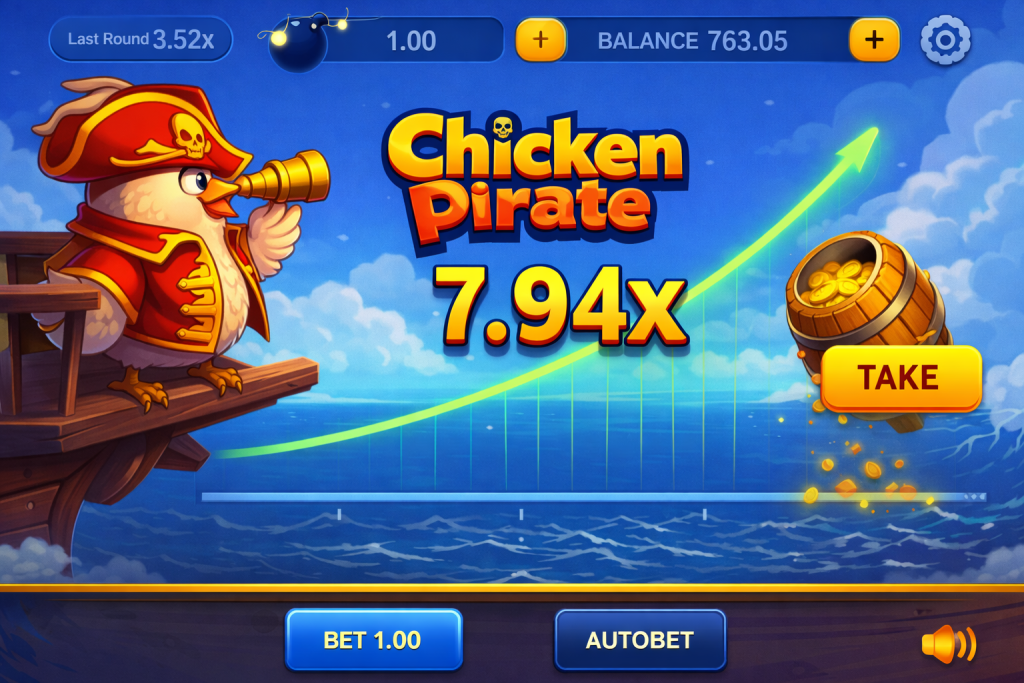
One of the most defining characteristics of Chicken Pirate is the speed at which rounds occur. Unlike traditional slot machines where reels spin for a few seconds before stopping, multiplier games progress almost immediately. The multiplier begins to rise, the player watches its movement and a decision must be made quickly. Within moments the round ends and another can begin.
This rhythm creates a continuous flow of gameplay. Because each round is short, players often experience the session as a smooth sequence rather than a collection of individual events. The mind tends to focus on the current multiplier rather than on the number of rounds already played. As a result, time can appear to move more quickly than expected.
In many forms of entertainment this kind of rhythm is intentional. Fast cycles keep attention focused and reduce interruptions in the experience. In a casino environment, however, this speed also means that a player may participate in a large number of rounds within a relatively short period. Even when individual stakes remain small, the total number of decisions made during a session can increase rapidly.
Understanding this dynamic is an important part of responsible gambling. When players recognise how quickly rounds repeat, they can remain more aware of how long they have been playing. A session that feels brief might actually contain dozens of rounds, each contributing to the overall experience.
The Role of Momentum in Fast Casino Games
Fast games often develop a sense of momentum. In Chicken Pirate each round begins almost immediately after the previous one ends. This quick transition encourages players to continue without interruption because the next opportunity appears instantly.
Momentum can make the gameplay feel exciting and fluid. The rising multiplier draws attention and creates anticipation as the value increases. Once a round finishes, it is natural to want to experience the same tension again in the next one. The structure of the game supports this feeling by allowing rounds to begin again without delay.
While this continuous rhythm can enhance the entertainment value, it also means that players may spend less time reflecting on their previous decisions. In slower games the pause between spins provides a moment to consider the outcome. In multiplier games the next round appears before that pause becomes noticeable.
Responsible play involves recognising when momentum begins to guide decisions rather than deliberate choice. When players pause occasionally and observe the pace of the session, they regain a clearer sense of control over their gameplay.
When Repeated Rounds Turn Entertainment Into Habit
The simplicity of Chicken Pirate makes it easy to continue playing. The rules are straightforward, the interface is clear and the multiplier creates a visible focus during each round. Because the decision to collect the multiplier occurs quickly, the player’s attention remains fixed on the progress of the value rather than on the passage of time.
When rounds repeat continuously, the activity can gradually shift from conscious entertainment to automatic behaviour. Players may begin the next round simply because it appears immediately, not because they have decided to continue the session. This transition often happens quietly and without clear awareness.
Recognising this pattern helps players maintain balance during gameplay. Entertainment should remain a deliberate choice rather than an automatic reaction to the appearance of a new round. Pausing occasionally allows players to reconnect with their original intention for playing.
In practical terms, small breaks can help maintain this awareness. Even a brief pause between groups of rounds can restore perspective and prevent the session from becoming routine repetition.
Why Time Awareness Is Essential in Multiplier Games
Time awareness is one of the most valuable tools for responsible gambling. In games with longer rounds, the structure itself naturally slows the pace of play. Chicken Pirate operates differently because each round completes quickly and the next one appears almost immediately.
Without conscious attention to time, players may underestimate the length of their session. The engaging nature of the multiplier mechanic can draw focus toward the current round, leaving little attention for the broader duration of play.
Maintaining awareness of time does not require complex strategies. Simple habits such as setting a session length before beginning, checking the time periodically or taking regular pauses can help keep the experience balanced. These actions create natural breaks that interrupt the continuous flow of rounds.
When players understand the pace of multiplier games, they can enjoy the excitement of the rising multiplier while still maintaining control over their session. Awareness transforms the fast rhythm of the game from a potential distraction into a feature that can be appreciated responsibly.
The speed of Chicken Pirate is part of what makes it engaging. Recognising how that speed influences behaviour allows players to approach the game with greater balance, ensuring that the experience remains both entertaining and controlled.
The Illusion of Control in Crash-Style Games
How the Decision Moment Appears During a Round
This simple sequence shows how the player’s decision appears inside the round structure. The multiplier rises continuously, and the player chooses when to secure it. Because the decision happens during the round rather than after it, the gameplay can create the impression that timing alone determines the outcome.
Multiplier games create a very particular psychological environment. At first glance the structure appears simple: the multiplier increases and the player decides when to collect it. Because the player actively chooses the moment of collection, the experience often feels more interactive than many other casino games.
This interaction can produce what psychologists sometimes describe as the illusion of control. The player presses the button at a chosen moment and immediately sees the outcome connected to that decision. The action feels direct and personal, which can create the impression that skill or timing may influence the result.
In reality the structure of the round still contains an unpredictable element. The moment when a round ends is determined by the game system, not by the player. The player decides when to secure the multiplier, but the duration of the round remains uncertain.
Recognising this difference is important for maintaining a balanced perspective. The timing decision adds excitement and involvement, yet it does not remove the inherent unpredictability that exists in all casino games. Understanding that distinction helps players avoid overestimating their ability to control outcomes during a session.
The “Almost Won” Effect After a Sudden Crash
Another psychological moment often experienced in multiplier games occurs immediately after a round ends. When the multiplier rises to a certain point and then suddenly stops, players may feel that they were very close to achieving a higher result.
This feeling is sometimes described as the “almost won” effect. The player may think that waiting just a fraction of a second longer would have produced a better multiplier. Because the rising value is visible throughout the round, the mind naturally imagines how the outcome might have been different.
This reaction is a normal part of human decision-making. People often evaluate events not only by their outcome but also by how close they appeared to another possibility. In the context of a multiplier game, the difference between collecting at one moment and another can feel significant even though the round itself remains unpredictable.
Understanding this reaction can help players approach the game more calmly. Rather than focusing on what might have happened in the previous round, it is healthier to view each round as an independent event with its own timing and outcome.
Why Players Sometimes Try to Recover the Previous Round
After experiencing a round that ended unexpectedly, some players feel motivated to continue playing in order to regain what they believe was lost. This reaction is often connected to the emotional impact of seeing the multiplier rise and then disappear before it was collected.
The desire to recover a previous result can lead players to focus strongly on the next round. They may believe that another attempt will provide a better opportunity. While this feeling is understandable, it can also shift attention away from the broader purpose of the session, which should remain entertainment.
Responsible gambling encourages players to treat each round as separate from the one before it. Trying to recover a previous outcome can make decisions more emotional rather than thoughtful. When players recognise this impulse, they can pause briefly and restore a more balanced perspective.
Viewing each round independently helps prevent the previous outcome from influencing the next decision too strongly. This approach keeps the gameplay aligned with enjoyment rather than frustration or urgency.
Emotional Momentum in High-Speed Gambling Sessions
How Fast Rounds Build Tension, Drop Suddenly and Start the Cycle Again
This graph visualises the emotional rhythm that can develop during a fast multiplier session. As rounds continue, anticipation rises, tension peaks near the decision point, the crash creates a sudden drop, and the next round restarts the cycle. Repetition is what creates emotional momentum over time.
The repeated climb and sudden drop help explain why short multiplier rounds can create emotional momentum. The player does not experience each round in isolation. Instead, anticipation from one round often flows directly into the next, which can extend the session and reduce the sense of pause that normally supports more reflective decisions.
Fast games can create emotional momentum during longer sessions. Because rounds repeat quickly, feelings generated by one round may immediately carry into the next. A successful collection can encourage continued play, while a disappointing crash can motivate a quick attempt to try again.
This emotional rhythm develops naturally when gameplay moves at a high pace. The quick transitions between rounds leave little time for reflection, which can allow emotions to guide decisions more strongly than planned intentions.
Recognising emotional momentum is an important part of responsible play. When players notice that their decisions are being influenced by excitement or frustration, a short pause can help restore clarity. Even a brief break between groups of rounds can interrupt this momentum and allow the session to continue in a more controlled way.
Recognising the Early Signs of Loss of Control
One of the most valuable skills for maintaining responsible gambling habits is the ability to recognise early warning signs. These signals often appear gradually and can include spending more time playing than originally planned, increasing stakes to recover previous rounds or feeling irritated when stepping away from the game.
Another sign can be the growing belief that the next round must produce a better outcome. When expectations begin to shift toward recovering previous results rather than enjoying the gameplay, it may indicate that the session is moving away from its original purpose.
Being aware of these patterns allows players to respond early. Taking a break, reviewing personal limits or ending the session altogether can help maintain a healthy balance between entertainment and responsibility.
Chicken Pirate, like any fast-paced multiplier game, can create an engaging environment that captures attention quickly. By understanding the psychological responses that may arise during gameplay, players are better equipped to remain aware of their behaviour and maintain control throughout their session.
Setting Spending Limits Before a Session Begins
One of the most effective ways to approach any casino game responsibly is to decide on a financial limit before the session begins. In games such as Chicken Pirate, where rounds progress quickly and decisions are made repeatedly, planning ahead becomes even more important.
A spending limit is simply the amount of money a player is comfortable using for entertainment during a single session. This amount should always come from disposable funds rather than money required for everyday living expenses. When this boundary is defined in advance, the session becomes easier to manage because financial decisions no longer depend on the outcome of individual rounds.
Multiplier games can create moments of anticipation when the value continues to rise. In these situations it may feel tempting to continue playing longer in the hope of achieving a higher multiplier in a future round. When a clear spending limit already exists, however, the player does not need to reconsider their financial decisions during the session. The limit itself provides a stable point of reference.
Planning a budget also changes the way players perceive the results of each round. Wins and losses remain part of the entertainment experience rather than events that influence further spending. The session becomes defined by the planned limit rather than by emotional reactions to the gameplay.
Another benefit of pre-defined spending limits is that they introduce structure to the session. Instead of deciding repeatedly whether to continue playing, the player follows a simple principle: once the chosen limit is reached, the session ends. This removes uncertainty and allows the game to remain within comfortable boundaries.
Managing Time During Fast-Paced Casino Play
Time awareness is another key aspect of responsible gambling, particularly in games where rounds progress rapidly. Chicken Pirate moves at a pace that allows many rounds to occur within a short period. Because each round is brief and the next one begins almost immediately, the sense of time passing can become less noticeable.
Players who focus entirely on the rising multiplier may not realise how long the session has lasted. The game creates a rhythm where attention remains fixed on the next decision rather than on the overall duration of play. For this reason it can be useful to decide in advance how long a session should last.
Some players prefer short sessions that provide quick entertainment without extending too far into their schedule. Others may choose a longer session but plan specific breaks along the way. Both approaches help create natural pauses that restore awareness of time.
Pausing between groups of rounds allows players to step back from the continuous rhythm of the game. Even a short break can refresh attention and reduce the sense of automatic repetition. This moment of distance helps players return to the game with a clearer perspective.
In practical terms, time awareness can be maintained through simple habits. Checking the clock periodically, setting reminders or deciding on a session length before starting are all effective methods. These actions ensure that the pace of the game does not determine the duration of the session.
When time management is combined with financial limits, the gameplay remains balanced. The player retains control over both the length and the cost of the session rather than allowing the speed of rounds to shape those decisions.
Using Casino Responsible Gambling Tools
Most regulated online casino platforms provide a range of tools designed to support responsible gambling. These features are built directly into player accounts and allow individuals to set personal limits that remain active during gameplay.
One common tool is the deposit limit. This feature allows players to define the maximum amount of money that can be added to their account within a specific timeframe, such as a day, a week or a month. Once the limit is reached, additional deposits are temporarily restricted.
Another useful feature is the session reminder. Some platforms display notifications after a certain period of gameplay, informing the player how long the session has lasted. These reminders are simple but effective because they interrupt the continuous flow of rounds and restore awareness of time.
Cooling-off periods provide another layer of support. When activated, this feature temporarily prevents access to the account for a defined period. It allows players to take a break from gambling activity and return later with a fresh perspective.
In addition to these tools, many platforms also offer self-exclusion options. Self-exclusion allows players to block access to their account for a longer period if they feel that they need a more extended pause from gambling.
These systems are not designed to restrict enjoyment. Instead they function as practical safeguards that reinforce the limits chosen by the player. When used thoughtfully, responsible gambling tools provide structure that supports balanced and controlled gameplay.
Treating Multiplier Games as Entertainment Rather Than Income
A healthy perspective on gambling begins with recognising the purpose of casino games. Titles such as Chicken Pirate are designed to provide entertainment through suspense, anticipation and engaging gameplay. The rising multiplier and the quick pace of rounds create excitement that many players find enjoyable.
Difficulties can arise when the purpose of play changes. If a player begins to treat gambling as a way to earn money rather than as entertainment, the emotional meaning of each round shifts. Outcomes may start to feel like financial successes or failures rather than moments within a game.
Maintaining the understanding that casino games are forms of entertainment helps keep expectations realistic. The multiplier mechanic in Chicken Pirate is designed to create tension and excitement, not to guarantee financial outcomes. Viewing the game through this lens allows players to appreciate the experience without attaching excessive importance to individual rounds.
This perspective also encourages a calmer approach to gameplay. When the objective remains enjoyment, decisions become less influenced by pressure or urgency. The player participates in the game with curiosity and interest rather than with the expectation of achieving a specific financial result.
Responsible gambling is therefore closely connected to mindset. The way players think about the game influences how they react to wins, losses and the rising multiplier during each round.
Knowing When It Is Time to Stop Playing
Ending a session at the right moment is an essential part of responsible play. The ability to stop voluntarily demonstrates that the player remains in control of the experience rather than being guided by impulse or emotion.
Many players choose to end their session when they reach the spending limit they established before starting. Others may decide to stop after their planned time period has passed. Both approaches reinforce the principle that the session follows predetermined boundaries.
Emotional awareness can also guide the decision to stop playing. If a player begins to feel frustrated, impatient or overly focused on recovering previous results, it may indicate that a pause is necessary. These emotional signals often appear before the session moves beyond comfortable limits.
Stopping does not mean that the experience was unsuccessful. In fact, ending a session deliberately is a sign that the player has maintained control throughout the gameplay. The session remains defined by personal decisions rather than by the unpredictable nature of the game.
Chicken Pirate is designed to be engaging and dynamic. Its rising multiplier and quick rounds create an environment where excitement builds rapidly. When players combine awareness, planning and emotional balance, this environment can remain enjoyable without exceeding personal limits.
Responsible gambling ultimately centres on maintaining control over one’s decisions. By setting clear financial boundaries, managing time carefully, using available support tools and recognising when to stop, players can approach multiplier games with confidence and balance.
FAQ About Responsible Gambling and Chicken Pirate
Common Questions About Chicken Pirate and Responsible Play
Chicken Pirate is a fast-paced multiplier game where rounds occur quickly. Because decisions repeat frequently, players should manage their time and spending carefully during a session.
Multiplier games involve watching a value rise in real time and deciding when to collect it. This creates more tension and faster decision-making compared with traditional slot spins.
Players can stay in control by setting spending limits, deciding on a session length in advance and taking regular breaks during gameplay.
Most casinos provide tools such as deposit limits, session reminders, cooling-off periods and self-exclusion options.
Spending more than planned, playing longer than intended or trying to recover previous losses can be early warning signs.
A longer break may be useful when gambling begins to affect daily life, finances or emotional wellbeing.
Responsible Gambling and the Importance of Staying Aware
Chicken Pirate represents a modern style of casino gameplay built around speed and simplicity. The rising multiplier creates anticipation in every round, while the short duration of rounds allows gameplay to progress quickly. This dynamic structure is one of the reasons the game attracts attention from players who enjoy fast and engaging formats.
At the same time, the speed of the game highlights the importance of awareness. When rounds occur rapidly, it becomes easier to lose track of time or to continue playing without noticing how long a session has lasted. Responsible gambling focuses on maintaining control within this type of environment.
Understanding how the game works is an important first step. The multiplier system encourages quick decisions and continuous play, which means that players benefit from approaching the game with clear limits in mind. Setting a spending budget before a session begins and deciding how long to play can help keep the experience balanced.
Responsible gambling also involves maintaining a healthy perspective on casino games. Chicken Pirate is designed as a form of entertainment, not as a method of generating income. When players approach the game with this mindset, the experience remains enjoyable without unnecessary pressure.
Another key element of responsible play is recognising when to stop. Ending a session after reaching personal limits or after a planned period of time helps ensure that the game remains a controlled activity rather than an impulsive one.
The rising multiplier and quick rounds of Chicken Pirate create a distinctive gaming experience. When players combine awareness, planning and self-control, the fast pace of the game can remain entertaining while still allowing them to maintain full control over their time and decisions.